

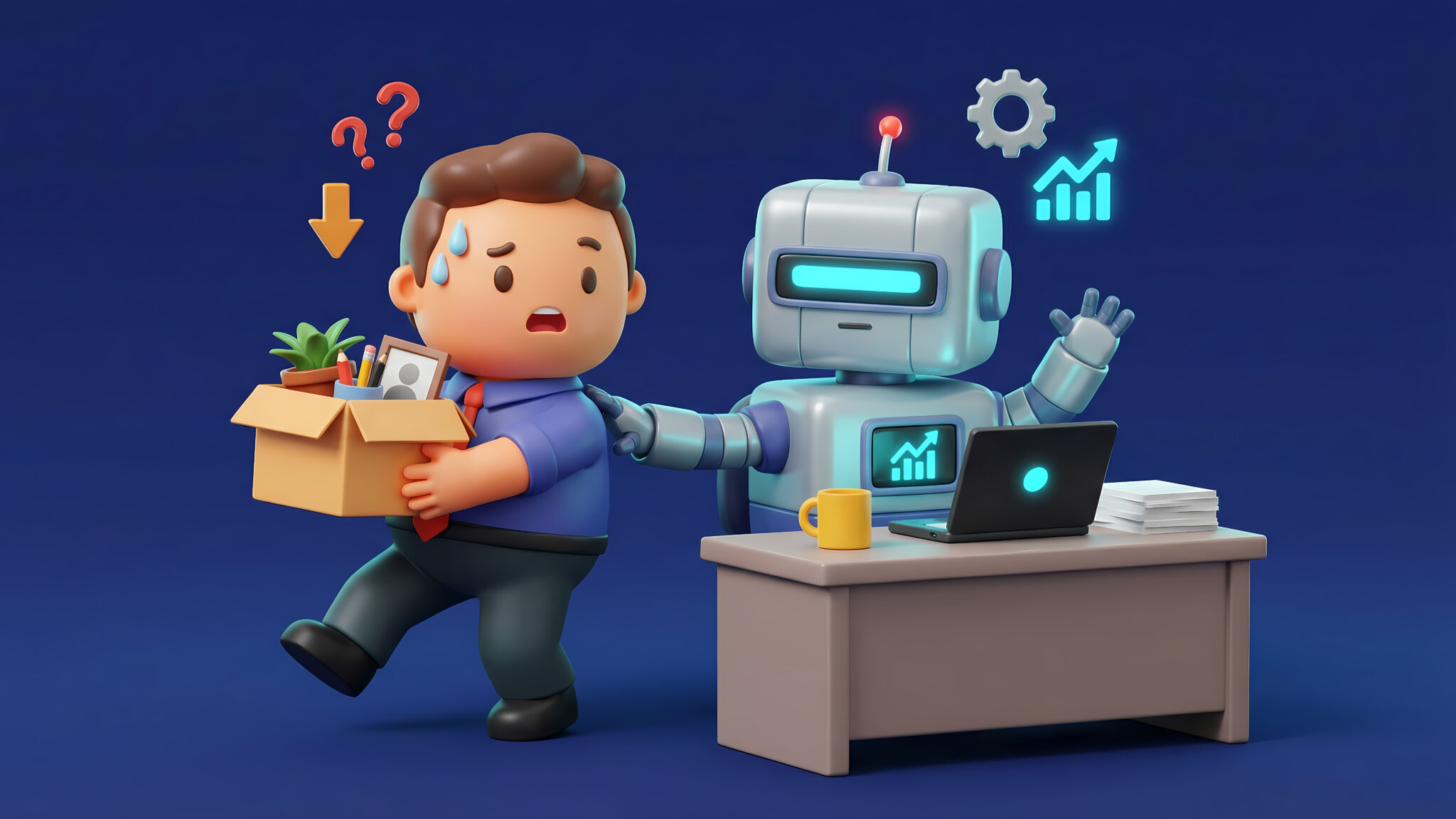
New research proposes a framework to give workers a stake in the AI systems built on their labor.
Listen to this article:
Data portability has often been presented as a way to reduce the control digital platforms exert through exclusive access to user data. In principle: if Meta, Alphabet, Spotify, or another platform holds your data, you should be able to take it with you. The idea has mostly been discussed as a consumer protection and competition policy tool. As Brookings explains, data portability can reduce switching costs and make it easier for rival firms to compete. But generative AI raises a potentially harder, worker-centric version of the portability problem. What if instead of a collection of images, videos, playlists, and posts, your data is the accumulated record of how you do your job? This question is at the heart of “Knowledge Guilds: Sharing the Productivity Gains of AI,” co-written by HBS AI Institute associate Zoë Cullen. The authors argue that workplace AI is not simply external automation adopted by firms. Rather, it is a tool that can capture workers’ expertise and convert it into firm-owned “knowledge capital”. This creates the potential for an adoption crisis, but Cullen and her authors propose knowledge guilds as a mechanism to ensure that the people who make AI effective share meaningfully in what it produces.
Key Insight: When Your Knowledge Becomes Their Capital
“When codified in this way, knowledge traditionally possessed by workers can become capital possessed by firms.” [1]
In the paper’s examples, knowledge often lives in the parts of work that are difficult to document: call center agents learn to read the nuances of tone, consultants develop instincts about how a client will react to a slide deck, and surgeons manipulate their hands and tools in ways that integrate years of embodied experience. This expertise, what the authors call knowledge data, is increasingly captured and encoded into AI systems, and thereby transformed into knowledge capital, an ownable asset that can be used by the organization without the worker who originally supplied it. This extractive relationship creates a misalignment of incentives. Workers who recognize this pattern will have strong reasons to withhold or degrade the data they supply. When they do, firms end up with weaker AI.
Key Insight: Not All Workers Face the Same AI Risk
“Different types of work vary in how easily labor data can be collected.” [2]
The authors’ taxonomy helps explain that AI can affect workers differently. Replicability measures how easily a firm can model a worker’s knowledge through surveillance and data capture, while substitutability tracks how easily that knowledge can be supplied by others. These dimensions create four distinct worker types, each facing a different level of power and peril in the face of AI. At one end of the spectrum are Templates, such as call center workers or data entry clerks, whose tasks are highly legible and interchangeable. Firms hold immense power over these workers because their data is easily harvested and they can be replaced with minimal friction. At the opposite end are the Artisans, star performers with rare, high-value expertise that is both difficult to model and impossible to find elsewhere, such as surgeons. Between them are Idols, who are hard to replace but easy to replicate, such as actors or influencers whose likeness, voice, or style can be digitized, and Vessels, who are easy to replace but hard to replicate, such as teachers, retail employees, or early-career consultants whose practical judgment and skills are hard to fully observe.
Key Insight: Knowledge Guilds Offer a Collective Response
“Knowledge guilds are a legal template for collective knowledge data governance.” [3]
The authors’ solution reimagines labor organizing for a data economy. Knowledge guilds combine data sovereignty—workers’ rights to privacy, usage control, and a financial share of their data’s value—and collective action, the pooling mechanism that creates negotiating power individual bargaining cannot. In practical terms, a guild would give workers a shared mechanism for setting terms: what data can be used, under what conditions, by whom, and with what compensation. With credible measurement, guilds could negotiate value-sharing arrangements and create clearer rules for consent, reuse, compensation, and accountability. One example metric is hours of labor saved by AI systems trained on worker knowledge.
Why This Matters
For business leaders and executives, this research is a call to move beyond a “harvesting” mindset toward a strategy of sustainable intelligence. Successful execution in the AI era requires a unified conversation between leadership, HR, legal, and IT departments. By exploring the idea of knowledge guilds, organizations can begin to design a social contract that recognizes workers as stakeholders in AI-enabled productivity advances, ensuring that the gains of AI are not just concentrated, but shared and incorporated into further organizational wins.
Bonus
For more research from Zoë Cullen on how AI governance is a question of ownership, incentives, and collective action, check out The Hidden Economics of Workplace AI.
References
[1] Viljoen, Salome, Danielle Li, and Zoë B. Cullen. “Knowledge Guilds: Sharing the Productivity Gains of AI,” Harvard Business School Working Paper, No. 26-064 (January 2026): 1.
[2] Viljoen et al., “Knowledge Guilds,” 21.
[3] Viljoen et al., “Knowledge Guilds,” 3.
Meet the Authors

Salome Viljoen is Assistant Professor of Law at the University of Michigan Law School.

Danielle Li is the David Sarnoff Professor of Management of Technology and a Professor at the MIT Sloan School of Management.

Zoë Cullen is Associate Professor of Business Administration at Harvard Business School and Associate at the HBS AI Institute.
Watch a video version of the Insight Article here.