
The HBS AI network effect brings together HBS AI Institute, Harvard Business School, and Harvard University as a whole to deliver leading-edge insights on the future of business with AI. Through articles, research, podcasts, live and asynchronous events, and social channels, we share evidence-based perspectives and practical guidance to help leaders translate AI’s potential into performance.

A Guide to Building Change Resilience in the Age of AI

Navigating the Jagged Technological Frontier
New York Times
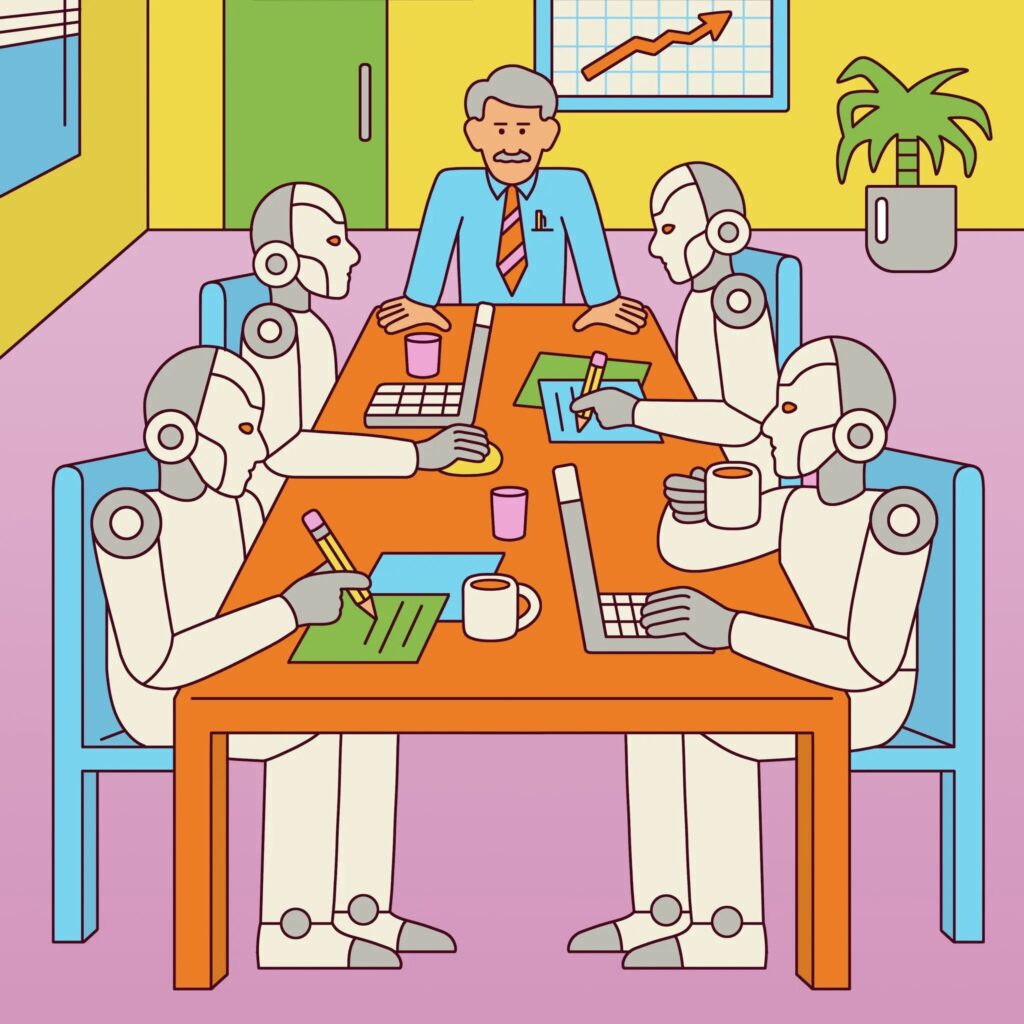
Where Human Labor Meets Digital Labor
CNBC

What Harvard researchers learned about use of AI in white-collar work at top companies
Harvard Business Review

Your AI Strategy Needs More Than a Single Leader

Agentic AI Is Already Changing the Workforce

Strategy in an Era of Abundant Expertise
HBR On Strategy: The Right Way to Launch an AI Initiative
HBR Ideacast: How Generative AI Changes Productivity
Events:
Upcoming Events:
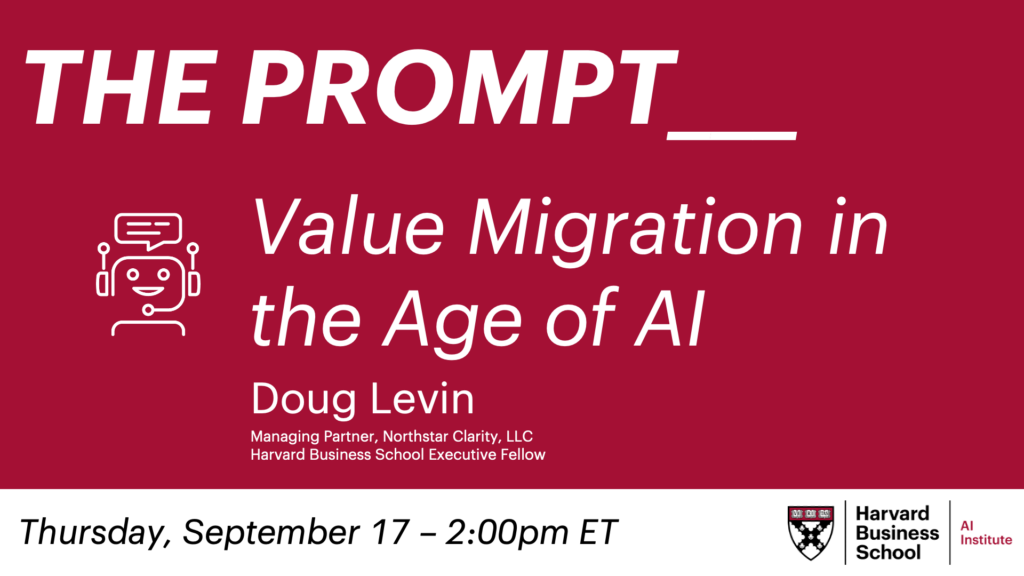
The Prompt: Value Migration in the Age of AI
Join Doug Levin, HBS Executive Fellow, startup CEO and board director, on how AI is reshaping where value is created—and captured—across industries. Moving beyond productivity hype, this session explores how commoditization at the model layer is shifting advantage toward proprietary data, workflow ownership, and application-layer control. You’ll gain a clear framework for understanding why many AI initiatives fail to deliver lasting impact, how value migrates from producers to users, and what it means to align strategy, talent, and investment with where value is going—not where it has been. Designed for tech leaders and enterprises evaluating AI, redesigning operations, or guiding board-level decisions, this webinar equips you with the clarity to position your organization for durable advantage in 2026 and beyond.
Ready to move forward?
Book a 30‑min Briefing