

Firms were built to control scarce knowledge. AI is testing that premise from the inside.
Listen to this article:
This article continues our coverage of the 2026 Open and User Innovation (OUI) Conference, where HBS Professor Raffaella Sadun presented the day two keynote “AI and the Organization of Knowledge.” Sadun describes herself as an organizational economist, so her focus shifted away from what AI does to individual tasks and toward a larger question: What happens when expertise itself becomes easier to capture, distribute, and apply across an organization?
Key Insight: “AI and Generative AI in particular [go] to touch a frontier that we have not experienced before, which is the ability to automate expertise.”
Raffaella Sadun
Traditional organizations are built partly around a constraint: valuable knowledge is scarce and usually concentrated in particular people. Hierarchies help route difficult problems to those experts, while less experienced employees handle more routine work. But generative AI could disrupt that arrangement because it can learn and reproduce forms of tacit expertise that were previously difficult to codify. That possibility changes how AI’s economic impact should be measured. A faster writing task or better individual analysis may reveal only a fraction of the value. The larger gains may depend on whether a company rearranges who solves which problems, who manages whom, and how knowledge travels.
Key Insight: “Humans are still needed to calibrate the judgment of AI” Raffaella Sadun
Testing this means going inside firms, which is why Sadun has spent years running experiments with a global multinational. The first strand looked sideways: could AI let an R&D employee absorb a marketing colleague’s expertise, and vice versa. That work became The Cybernetic Teammate. A newer, ongoing strand looks vertically. Each year, a six-person board evaluates proposed R&D investments using its knowledge of the company’s strategy. The researchers asked employees three levels below that board to evaluate ideas, then varied whether they could use an AI system containing the board’s distilled expertise. Access to the expert AI moved employees’ evaluations significantly closer to the board’s judgments, but an agentic version of the AI, asked to evaluate ideas by itself, did not reproduce the same result. Sadun did stress that alignment with the board is not the same as better innovation. The study tests whether knowledge can be transmitted, not whether the board is always right.
Key Insight: “Unfortunately, you cannot AI your way out of the sales and marketing function.”
Raffaella Sadun
In another portion of her talk, Sadun explored developing organizational dynamics triggered by AI. For example, once AI accelerates one part of a company, other functions may become the constraint. She described a cybersecurity firm whose R&D team was producing innovations every few weeks with AI assistance, while sales and marketing struggled to absorb and commercialize them. The imbalance became so severe that the company felt forced to update its organizational structure roughly every two months. AI may also reshape careers and the production of expertise itself. For example, senior experts could become more influential as their knowledge scales, and junior employees could gain access to capabilities through AI once reserved for higher levels. The middle may therefore face pressure if they are neither expert enough to have their knowledge amplified nor junior enough to benefit from AI-enabled guidance.
Why This Matters
The firms that capture AI’s value must learn how to reorganize around a new reality in which expertise is more scalable, but coordination, motivation, and execution remain distinctly organizational challenges. Leaders should identify where expertise currently sits, test where AI can transmit it without degrading judgment or threatening security, and watch for cross-functional weak links that turn local acceleration into enterprise friction. Her closing note to researchers translates well to the C-suite: this era rewards those willing to run real experiments and wait for the results, encouraging managers themselves to become experiments and scientists within their firms.
Meet the Speaker
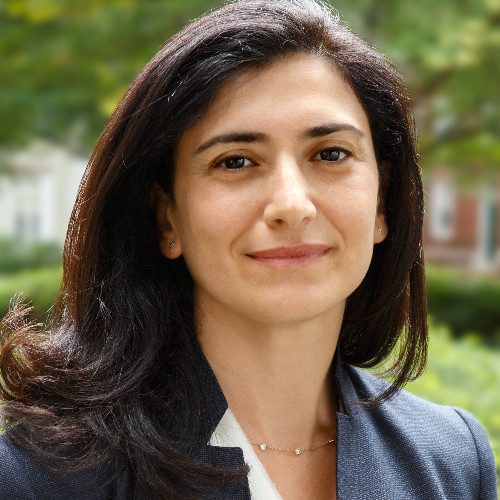
Raffaella Sadun is Charles E. Wilson Professor of Business Administration at Harvard Business School, and is a Co-Chair of Harvard Business School’s Project on Managing the Future of Work and co-PI of the Digital Reskilling Lab at the HBS AI Institute. Her research focuses on managerial and organizational drivers of productivity and growth in corporations and the public sector.